
Endovascular Aortic Interventions
A modern, minimally invasive way to treat aortic aneurysms and related conditions
If left untreated, aortic conditions can cause life-threatening bleeding or rupture.
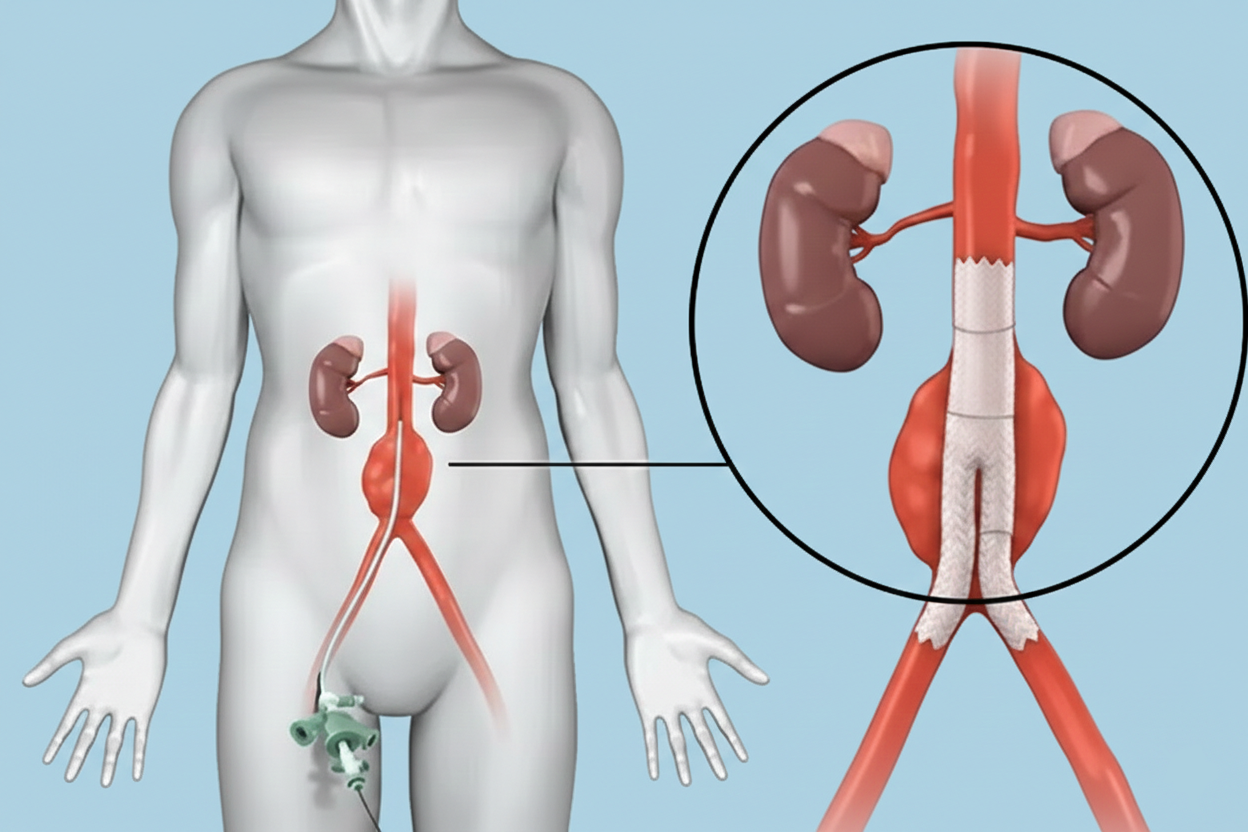
Understanding the Aorta
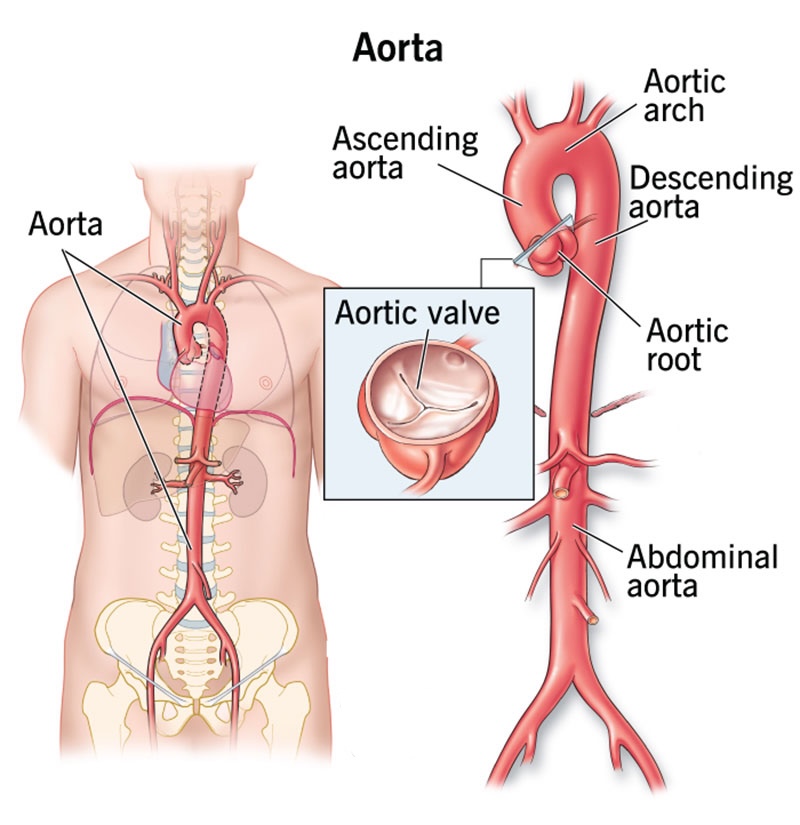
The aorta is the body's largest artery. It carries blood from the heart to the rest of the body.
Aortic Problems Include:
What Are Endovascular Aortic Interventions?
Endovascular aortic interventions are minimally invasive procedures performed by interventional radiologists/vascular specialists.
Using advanced imaging, doctors guide a catheter (thin tube) through a small incision, usually in the groin, and place a stent graft (a fabric-covered metal tube) inside the diseased part of the aorta.
Types of Endovascular Aortic Interventions
EVAR — Endovascular Aneurysm Repair
Treats abdominal aortic aneurysms (AAA). Stent graft is placed inside the abdominal aorta.
TEVAR — Thoracic Endovascular Aortic Repair
Treats thoracic aortic aneurysms or dissections. Stent graft is placed inside the chest portion of the aorta.
Complex Aortic Repairs
Fenestrated/Branched EVAR (FEVAR/BEVAR): Custom stents with branches/holes to preserve blood flow to kidney, liver, or bowel arteries. Used for aneurysms near vital branches of the aorta.
Why Choose Endovascular Aortic Repair?
Minimally invasive
Only a small groin incision, no large open surgery
Faster recovery
Most patients return home in 2-3 days
Lower risk
Less blood loss, fewer complications
Safe and effective
Prevents rupture and saves lives
Suitable for high-risk
An option even for those unfit for open surgery
Proven results
Excellent long-term outcomes worldwide
Who Should Consider EVAR/TEVAR?
Medical Indicators
- •An abdominal or thoracic aortic aneurysm > 5-5.5 cm
- •Rapidly growing aneurysm
- •Symptomatic aneurysm (pain, tenderness)
Other Candidates
- •Aortic dissection or traumatic injury
- •High surgical risk but need urgent treatment
- •Patients unsuitable for open surgery
Frequently Asked Questions
🌟 Take the Next Step
If you or a loved one has been diagnosed with an aortic aneurysm or dissection, ask your doctor about endovascular aortic repair. It may offer:
A safer alternative to open surgery
Faster recovery
Long-term protection against rupture
👉Consult an interventional radiologist or vascular specialist to know if you are a candidate for EVAR or TEVAR.